


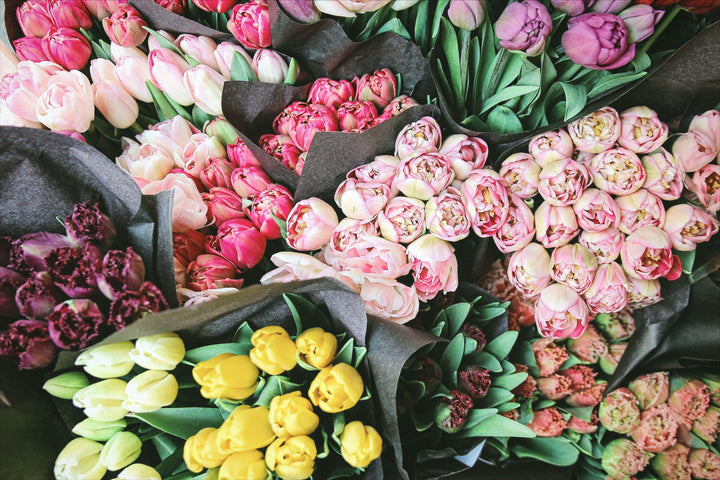
Tulips - the popular harbingers of spring
Tulips are a popular genus of flowers belonging to the lily family. They originated in Central Asia and have been known in Europe since the 16th century. Today, tulips are cultivated in many parts of the world and are particularly popular in the northern regions of Europe and North America.
Tulips come in a variety of colors and forms. The blossoms can be single or double and typically have six sepals and six stamens. Some of the best-known tulip varieties include the red Triumph tulip, the white Emperor tulip, and the yellow Darwin tulip.
A particularly interesting phenomenon observed in Holland in the 17th century was the so-called "Tulip Mania". During this period, the price of certain tulip varieties, especially rare and exotic ones, skyrocketed. Some people paid exorbitant sums of money for unique tulip bulbs, and there were even reports of people spending their entire fortune on a single bulb. The hype was based on short-term supply and high demand and ultimately led to a market collapse.
Tulips are mainly grown as ornamental plants today, although some varieties are also used for flower breeding. They are excellent for bedding and border plantings and can also be cultivated in pots or containers. Tulips require full sun and well-draining soil to thrive.
There are also many methods for caring for tulips. In spring, the plants should be watered regularly to keep the soil moist. Once the flowers have faded, the stems should be cut back to conserve energy for the next season. Tulip bulbs should be dug up and dried in the fall after flowering, before being replanted in the spring.
A popular way to display tulips is in a bouquet. They can combine a variety of colors and shapes to create a very attractive display. They are also excellent as cut flowers for use in the home or as a gift.
Tulips in a vase require some basic care to stay fresh for a long time. Here are some tips:
-
Make sure the vase is clean and sterile before placing the tulips in it.
-
Cut the ends of the tulip stems diagonally so they can absorb water better.
-
Fill the vase with cold water.
-
Place the vase in a cool, shady spot to prevent the flowers from drying out.
-
Change the water in the vase regularly and recut the stems.
-
Remove withered flowers and leaves to maintain the beauty of the blossoms.
Note that tulips in a vase do not last particularly long, usually about 5-7 days, so I recommend changing and checking the flowers regularly.
Overall, tulips are a beautiful and versatile plant that can bring much joy both in the garden and indoors. They have a rich history, and their beauty has fascinated generations. Tulips are one of the first heralds of spring, bringing color to the garden after a long winter. They are a reminder that life goes on and that the beauty of nature is inexhaustible.
Tulips also have deep symbolic meaning in many cultures and have often been associated with love, passion, and uniqueness. In Turkish culture, for example, tulips are a symbol of immortality, and in Dutch culture, they symbolize Dutch identity and freedom. In literature and art, tulips have also played a prominent role, from the famous still lifes of 17th-century Dutch painters to modern poetry and photography.
Tulips are also important for the economy, especially in countries like Holland, where tulip cultivation is a significant industry. Growing tulips requires specialized knowledge and skills, and many family businesses have specialized in tulip cultivation and have a long tradition in this field.
In conclusion, tulips are a wonderful and versatile plant that plays a significant role in both nature and culture. Their beauty and symbolic meaning have made them one of the most popular flowers in the world. Growing tulips requires specialized knowledge and skills and also contributes to the economy. Tulips are a wonderful addition to any garden and a delight for everyone who sees them.
